
The post Working From Home in an Apartment appeared first on The Beacon at Waugh Chapel Blog.
]]>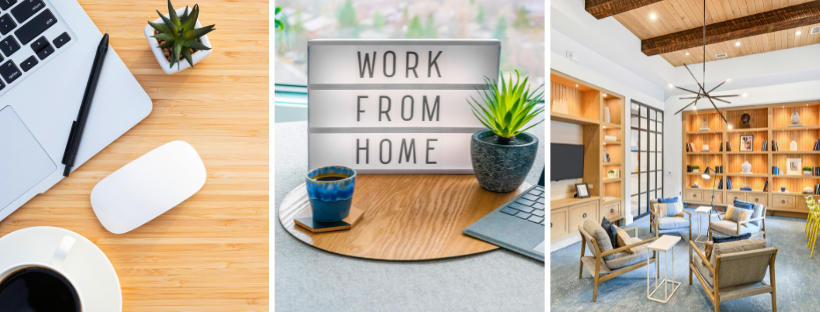
Many companies have adapted to a hybrid model, allowing employees to work a portion of the week at home and the remaining time in the office to help create a home/life balance. In doing so companies are finding increased productivity with reduced costs. Are you currently or planning to work from home? If the answer is yes, working from home doesn't have to be limited to your apartment.
Create a space that separates “home and office” so that your home isn’t synonymous with work; this will help you separate yourself from work and avoid burnout. The Beacon at Waugh Chapel offers several spaces right outside your door to help with this. The Business Center, Clubhouse and Games Room are all equipped with WiFi, a place to sit, and a bright, pleasant environment. You could also get some fresh air during your breaks by exploring the outdoor areas of the community, or even take your laptop outside and set-up at one of the patio tables.
These alternative places to work in our community are made for you and your comfort. We hope you are able take advantage of all of the spaces in our community to make your work from home experience more productive and relaxing!
Below are some tips for creating a successful work-from-home atmosphere:
- Stick to a schedule and create rituals. Some remote work positions have flexible hours, but setting and sticking to a schedule will help you maintain a work/life balance by staying focused throughout the day and allowing you step away from work at the end of your shift. Creating rituals can also help with this. Maybe brewing a cup a coffee or tea everyday could signify the start of the work day and taking an afternoon walk outside could replace a “commute” and signify a shift to home time.
- It can be a great refresh to take your work elsewhere, such as to the Business Center or onto your patio. This helps break-up the monotony and helps keep you from seeing your home as your sole workplace.
- Make sure you are taking plenty of breaks – 5-10mins where you can stand-up, move your body and give your eyes a screen break.
- If you have a pet – include them in your day. A few minutes with your best friend can change your whole mindset and give you the refresh you need to finish your work day on a positive note.
- Since you have access to your own kitchen and pantry, try to make healthy eating choices.
- Open a window – It may sound simple, but just a bit of fresh air or noises from outside can help you connect with the work around you and not make you feel cooped-up while working from home.
- Listening to music can give you more energy. Since you’re working from home, maybe try enjoying some upbeat or relaxing favorites – you likely don’t even need headphones.
- Encourage your colleagues to have virtual interactions where you can enjoy each other’s company outside of work – Maybe swap favorite recipes, start a book club, or just have a happy hour and hang out. Having this social time may improve your working relationships and strengthen your team.
The post Working From Home in an Apartment appeared first on The Beacon at Waugh Chapel Blog.
]]>The post Pet-Safe Houseplants appeared first on The Beacon at Waugh Chapel Blog.
]]>
Bird's Nest Fern (Asplenium nidus)
- Thrive in lower light conditions, 60-80F
- This humidity-loving fern grows best in loose, fast-drying soil with monthly fertilization during the growing season (spring & summer). Water when the top inch of soil feels dry to the touch.
African Violet (Saintpaulia)
- Prefer indirect sunlight, 73-77F
- African violets need moderate watering and prefer to be watered from the bottom in a self-watering pot, with care given to keep their leaves dry. With proper conditions and regular fertilization, these little beauties can bloom almost all year round.
Polka Dot Plant (Hypoestes phyllostachya)
- Bright, indirect light, 70-80F
- Monthly fertilizer (spring & summer)
- This spotted beauty provides a pop of color all year round. This is a great plant for folks who tend to water often, as they prefer consistently moist soil.
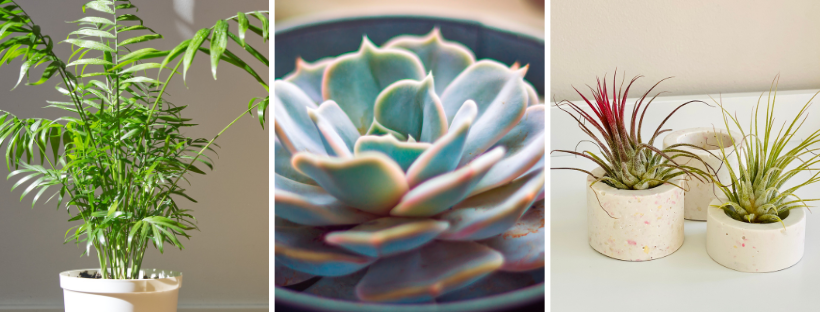
Parlor Palm (Chamaedorea elegans)
- Prefers bright, indirect light, but can adapt to slightly lower light conditions.
- Use a weak fertilizer once or twice per growing season (Spring-Fall)
- These lovely palms bring a touch of the tropics to your home! They prefer a peaty soil-based potting mix (look for one labeled for tropical plants) and can grow to be 2-6ft tall. These plants are sensative to overwatering, so only water when the top inch of soil is dry.
Echeveria
- Prefer a warm, dry location with bright sunlight, with at least four to six hours of sunlight daily.
- These plants do best in well-draining, porous soil. You can find cactus potting mixes at nurseries and garden centers, or make your own with three parts potting soil, two parts coarse sand, and one part perlite.
- These fast-growing succulents are perfect if you find yourself forgetting to water your plants. They prefer dryer soil and can tolerate periods of neglect. When watering, never let water sit inside the rosette and always remove dead leaves from the bottom as it grows, as they can cause fungal diseases or attrack pests.
Air Plants (Tillandsia)
- These tropical plants don't require potting soil and take their nutrients from the air and water. Since they grow on trees and recieve dappled sunlight in the wild, they prefer bright, indirect light in our homes.
- If your home is more dry, your air plants may need to be misted more frequently between soaks, while, if your home is more humid, they need water less often.
- To water air plants, place them "face down" in a bowl, sink, or container and let them soak for 10-20 minutes. Gently shake an excess water off or allow them to dry on a towel afterwards, as sitting water on the plants can cause rot.
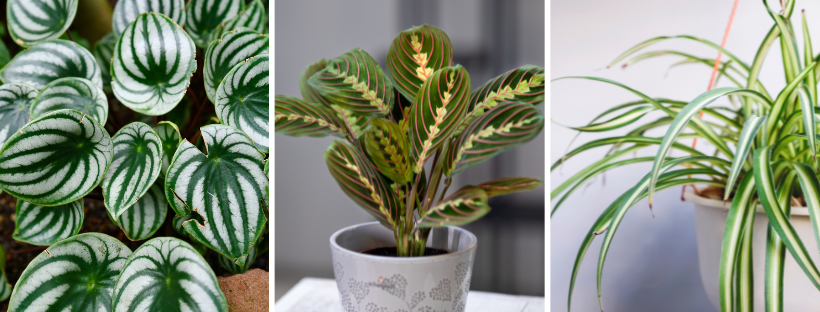
Radiator Plant (Peperomia)
- Peperomia prefer loose, well-drained soil, such as orchid mix, and a pot with plenty of drainage. Warm, ~65-75F temperatures and humid environments are great for these plants. Their ideal location is in medium to bright, indirect light, but they can also handle lower light. Plants in lower lighting conditions will be slower growing and require less water.
- Water slowly, allowing water to drain from drainage holes, rather than allowing it to sit in the saucer. Allow the soil to dry out between watering so the plants do not stay soggy. Over-wet plants can lead to root rot. If the stems and leaves feel firm and the soil is moist, wait to water.
- Peperomis plants come in a variety of fun colors and leaf textures!
Prayer Plant (Maranta leuconeura)
- Prayer plants are tolerant to low light conditions, but prefer bright, indirect sunlight. The best location for them is somewhere with high humidity.
- Feed with all-purpose fertilizer and warm water every two weeks, spring-fall.
- When potting your prayer plant, use well-drained soil, so that water does not sit around the roots. They should be kept moist, but not soggy. In the winter, keep the soil a bit drier, while maintianing humanidity.
Spider Plant (Chlorophytum comosum)
- Prefer bright, indirect light (but can tolerate lower light), ~60-75F
- Fertilize once a month in spring & summer with indoor plant fertilizer.
- This plant is classic when it comes ot easy care houseplants, as they are pretty tolerant of different conditions and of care mistakes. Water well, but do not allow the plant to get soggy.
- Allow the soil to dry out some between waterings.
The post Pet-Safe Houseplants appeared first on The Beacon at Waugh Chapel Blog.
]]>